
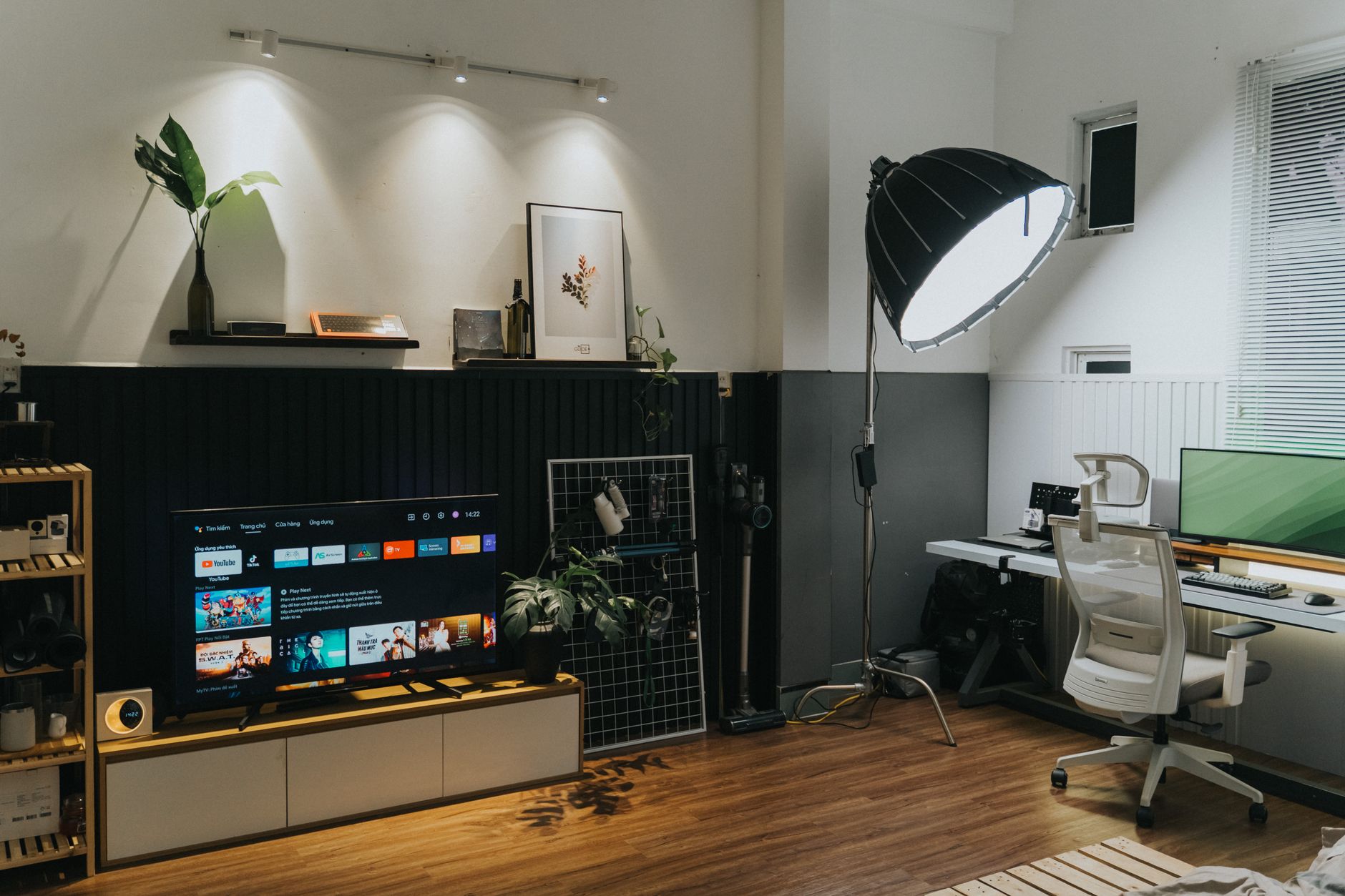
Good modern home office ideas begin with the room you already have, not a shopping basket. In a Colkirk cottage, a converted barn near Fakenham or a newer estate house, modern home office ideas have to cope with thick flint walls, 2.2-metre beams, a north-facing window and a broadband line that arrives down a long rural driveway. A desk that looks sharp in a London flat photo often fails here: too deep for the alcove, too pale for the light, too heavy for a floor that slopes. This guide covers layout, kit, prices in pounds and the small details — cable runs, acoustic panels, chair choice — that decide whether a room gets used five days a week or becomes a drying rack by February. Every suggestion assumes a real budget, usually £400 to £1,200, and a room that has to do more than one job.
Start With the Room, Not the Furniture
Measure before browsing. A usable desk needs 1,200mm of width, 700mm of depth and 720mm of clearance beneath. Add 900mm behind for a chair to roll back. Many Norfolk cottage alcoves run 1,050mm wide, which rules out most off-the-peg desks and pushes you towards a cut-to-size worktop instead.
Light matters more than paint colour. Facing a window puts glare behind your monitor and blows out webcam exposure; backing onto it silhouettes your face. Sitting side-on to the glass, with the window to your left if you are right-handed, gives even light through the short Norfolk winter afternoons without constant blind adjustment.
Heat and damp decide longevity. Solid walls in older village properties sit two or three degrees below room temperature, and laptops left against them collect condensation. Keep the desk 50mm off external walls, run a small oil-filled radiator at 18°C rather than blasting a fan heater, and the room stays workable year-round.
Home Office Setup Ideas for Awkward Alcoves
The strongest home office setup ideas for tight rooms use vertical space: a 600mm-deep worktop on floating brackets, a monitor arm clamped to the rear edge, and two shelves above at 400mm and 700mm. That frees the entire floor, costs roughly £180 in materials, and suits sloping cottage floors better than a four-legged desk.
Desk, Chair and Screen: Where the Money Actually Goes
Split the budget roughly 50/30/20 across chair, screen and desk. A chair carries your spine for 1,800 hours a year; a desk simply holds things up. Reversing that split is the most common mistake made, and it shows up as lower back pain within about six weeks of full-time use.
Screens deserve specifics. A single 27-inch 1440p panel beats two cramped 1080p monitors for most desk work, and it fits a 1,200mm worktop without crowding the keyboard. Pair it with an arm so the top edge sits level with your eyebrows and the glass sits roughly an arm’s length from your face.
| Budget band | Chair | Desk | Screen |
|---|---|---|---|
| £400 entry | £120 mesh task chair | £90 fixed-height desk | £130 24-inch 1080p |
| £750 mid | £280 ergonomic chair | £200 sit-stand frame | £220 27-inch 1440p |
| £1,200 long-term | £450 refurbished Aeron | £350 dual-motor electric desk | £320 27-inch colour-accurate |
| £2,000 studio | £1,300 new premium chair | £500 solid oak top and frame | £600 34-inch ultrawide |
Where Second-Hand Beats New
Refurbished Herman Miller Aerons circulate at around £450 against £1,300 new, and ex-office electric frames appear at Norfolk clearance sales for £120 to £200. Check the gas lift travel and the stated frame load before paying; anything rated under 70kg wobbles noticeably at standing height, especially on an uneven cottage floor.
Storage, Cables and Keeping the Room Usable
Storage fails when it sits too far away. Anything used daily belongs within a seated arm sweep of about 700mm, anything weekly can live on a shelf, and archive boxes go to the loft. Sorting those three categories honestly removes roughly a third of what currently occupies a desk surface.
- Adhesive under-desk cable tray, £15 to £25 — clears the floor for vacuuming and keeps a chargers away from a curious spaniel.
- Velcro ties in 20cm lengths, about £6 a pack — reusable when you swap a monitor, unlike zip ties.
- One 6-gang extension screwed to the desk underside, around £12 — a single plug run to the wall instead of five.
- Labelled cable tags, roughly £5 — saves ten minutes every time you trace a USB-C lead behind the desk.
- A lidded box for router spares, ink and adaptors, about £10 — keeps the background tidy on video calls.
Dust and wood burners go together in this part of the country. A room with a stove needs a keyboard cover and a monthly wipe of monitor vents, otherwise cooling fans clog within a single season. An £80 air purifier helps, though closing the office door while the stove is lit costs nothing at all.
Keep one zone clear. Reserving 400mm of empty worktop to the right of the keyboard leaves room for paperwork, a notebook or a mug without shuffling equipment aside. The most durable modern home office ideas protect that empty space deliberately instead of filling every surface with accessories and gadgets.
Broadband, Sound and Calls in a Village Property
Rural broadband varies street by street. Full fibre reaches parts of the Fakenham area at 500Mbps, while some outlying properties still sit on 12Mbps copper. One video call needs about 3Mbps upload; two people working at once need 8Mbps up, which is where older lines fail rather than on download speed.
Wi-Fi through flint is the usual culprit. A 600mm solid wall stops 5GHz almost completely, so a mesh node in the hallway or a £45 powerline adapter beats upgrading the package. Running a single Cat6 cable to the office, around £60 in parts, fixes the problem permanently and adds nothing to the monthly bill.
Sound needs less kit than people expect. Two acoustic panels at £30 each behind the desk, a wool rug and lined curtains cut echo enough for clear meetings. A wired headset at £70 outperforms a £200 wireless model for calls, and it never dies halfway through a client review.
Design the Office Around the Life Outside It
A village office earns its keep by handling household admin as well as paid work, which is why practical modern home office ideas allow for both. The same desk becomes the place where you compare travel destinations in uk for a spring break, log seed orders and print school forms. A shallow drawer stops that paperwork colonising the surface.
Breaks belong in the plan. Pin a short list of parks for dog walking near me by the door — Pensthorpe, the Holkham pine belt, the Wensum meadows — and a 25-minute loop becomes automatic at eleven. Searching dog walking parks near me on a phone at three in the afternoon rarely produces the same discipline.
Growing records suit the office too. A ring binder of uk allotment gardening notes — sowing dates, blight years, what the heavy Colkirk clay refuses to grow — takes one shelf slot. Plenty of people running allotment gardening uk plots keep a spreadsheet alongside, which makes rotation across four beds far easier to track.
The kitchen link matters as well. Households cooking from great british baking recipes at lunchtime need a timer within earshot, and a tablet stand on the shelf keeps british baking recipes off a floury worktop. That small habit tends to hold the midday break to 40 minutes rather than a drifting hour.
Holiday planning is the other recurring job. A second screen makes weighing the best uk travel destinations against ferry times genuinely quick, and browsing hays travel destinations from uk on proper glass beats squinting at a phone. Keep one folder of travel destinations uk quotes, and comparing the best travel destinations uk offers stays manageable from January through to booking.
How Much Should a Full Home Office Cost to Set Up?
A workable room lands between £400 and £1,200 for most households. At £400 you get a £120 mesh chair, a £90 desk, a £130 monitor and roughly £60 of lighting, cable trays and a desk lamp. At £1,200 the chair moves to a refurbished Aeron at around £450, the desk becomes a dual-motor electric frame near £350, and the screen steps up to a colour-accurate 27-inch panel. Add £150 for acoustic panels and a wired headset if you take more than five calls a week. Sensible modern home office ideas spread that spend across two or three months rather than one order, so you can test the layout before committing to the expensive chair.
Is a Garden Room Better Than Converting a Spare Bedroom?
It depends on how many hours the room works and whether you need the bedroom back. A 3m by 3m insulated garden room typically costs £12,000 to £20,000 installed with power and full insulation, plus around £120 a year to heat properly. Converting a box bedroom costs £600 to £1,500 and takes a weekend. The garden room wins on separation, noise and resale appeal, particularly where a household has two people on calls at once. The bedroom conversion wins on cost and on winter convenience, since nobody crosses a wet Norfolk garden in January with a laptop. Rent out a room or host family often, and the garden room justifies itself faster.
What Lighting Works Best in a North-Facing Village Office?
Layer three sources rather than relying on one ceiling fitting. Start with a 4000K LED panel or bulb overhead at roughly 1,000 lumens for general light, which reads as neutral rather than the yellow cast of older 2700K bulbs. Add an adjustable desk lamp at 500 to 700 lumens positioned on the opposite side to your writing hand, so it does not cast a shadow across paperwork. Finish with a bias light behind the monitor, around £20, which cuts contrast fatigue during dark afternoons. Avoid placing any lamp directly in the webcam frame. Dimmable fittings matter in rooms with small cottage windows, where the difference between a bright June morning and a grey January one is substantial.
