
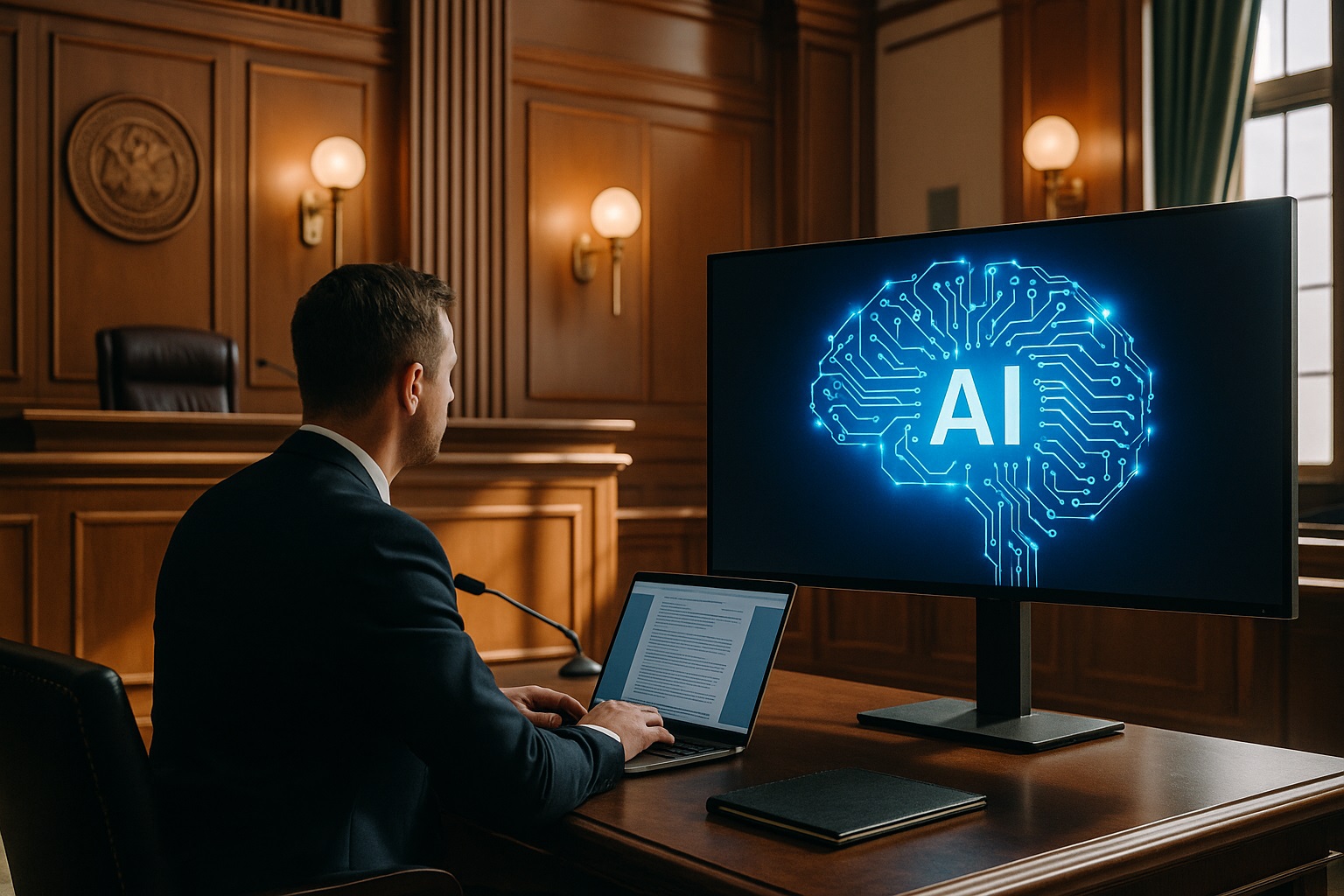
Artificial intelligence is transforming not just how we work, shop, and communicate — it’s also challenging the foundations of modern legal systems. From questions of accountability in automated decisions to the admissibility of algorithm-generated evidence, the intersection of AI and law is forcing policymakers, lawyers, and judges to confront issues that didn’t exist even a decade ago. As AI continues to evolve, so too must the frameworks that govern its use — and the societies it increasingly influences.
Responsibility in the age of automation
One of the central legal questions posed by AI is: who is responsible when things go wrong? If an autonomous vehicle causes an accident or an algorithm denies someone a loan or a job, where does liability fall — on the developer, the user, the platform, or the machine itself? Traditional legal doctrines, which rely heavily on human intent and foreseeability, struggle to apply to systems that learn and adapt independently. Lawmakers in various jurisdictions are exploring how to define “algorithmic accountability,” and whether AI systems should be treated as tools, agents, or something entirely new. These questions aren’t just theoretical — they have real implications for consumer protection, corporate governance, and public safety.
Regulation, transparency, and ethical use
Governments and institutions around the world are racing to develop regulations that ensure AI is deployed safely and fairly. The European Union’s AI Act, for example, introduces risk-based categories for AI applications, from low-risk chatbots to high-risk systems like biometric surveillance or credit scoring. A key focus is transparency: users must know when they’re interacting with AI, and organizations must be able to explain how decisions are made. Legal frameworks are also being shaped by ethical considerations — particularly the need to avoid discrimination, invasion of privacy, or manipulation. For legal systems, this means not only creating new laws, but also adapting courts, enforcement agencies, and legal education to keep pace with rapid technological change.
AI in legal practice and the courtroom
Ironically, AI is also transforming the legal profession itself. Law firms are using AI tools to review contracts, conduct legal research, and predict case outcomes — significantly speeding up traditionally time-consuming tasks. In some countries, algorithms assist judges in determining bail eligibility or sentencing recommendations, raising concerns about bias and due process. As AI becomes a more active participant in legal workflows, lawyers and judges must learn how to critically assess and challenge the outputs of these systems. The law must also grapple with whether — and when — AI-generated content or advice qualifies as legitimate, binding, or admissible. In this evolving landscape, understanding both the power and the limits of AI is now an essential legal skill.
