
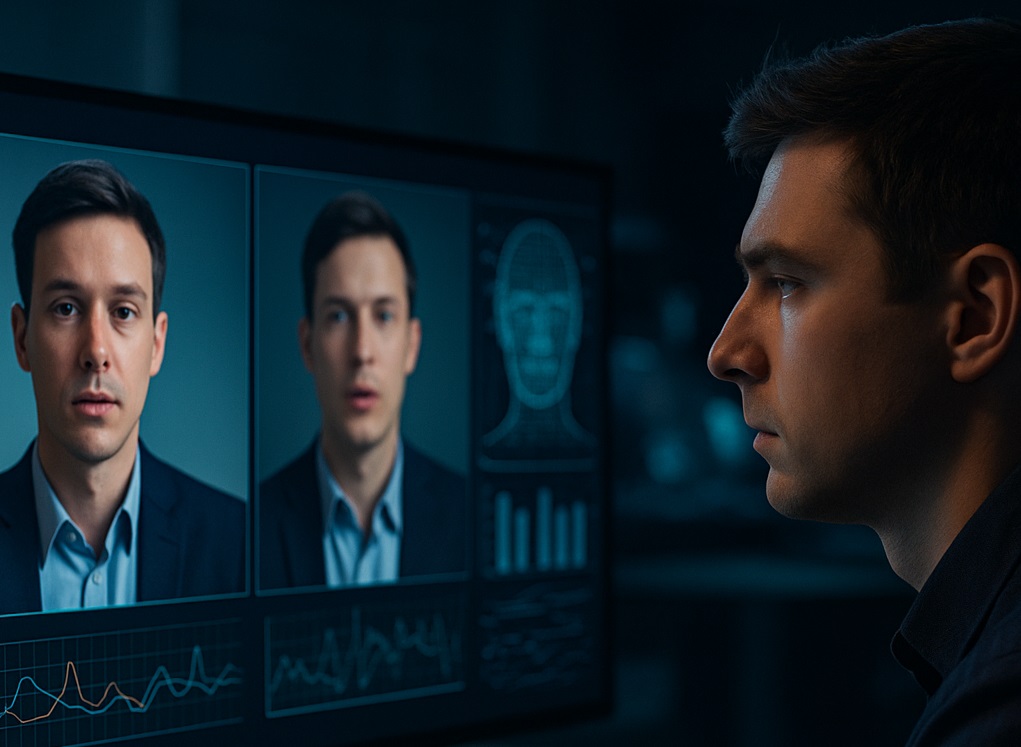
What happens when we can no longer trust what we see or hear? This question, once reserved for science fiction, is now a pressing concern in the real world. Deepfakes — AI-generated videos, images, or audio that convincingly mimic real people — are challenging the legal, technological, and ethical frameworks that underpin communication and identity. As their realism increases, and barriers to creation decrease, societies around the globe are scrambling to respond to a new type of digital deception.
Technology that outpaces the law
At its core, deepfake technology uses machine learning to replicate facial expressions, voice patterns, and body movements with stunning accuracy. While the technology can be used for positive applications — such as film production, historical reconstructions, or language translation — it also presents significant risks. Malicious deepfakes have been used to create false political speeches, fake confessions, financial scams, and non-consensual explicit content. The speed at which these tools have developed has left regulators and lawmakers in reactive mode. Few jurisdictions have clear laws specifically addressing deepfakes, and existing legal concepts like defamation, impersonation, or fraud often struggle to cover the nuances of synthetic media. In many cases, by the time a harmful deepfake is detected, the damage to reputation or public trust is already done.
The challenge of detection and authentication
One of the greatest difficulties in managing the deepfake threat is detection. As AI models improve, even trained analysts and forensic software can struggle to distinguish real from fake. In response, technology firms and academic institutions are racing to build authentication tools — including blockchain-based provenance records, digital watermarks, and AI detectors. However, these tools are still in development and can be bypassed by advanced users. For platforms like social media and video hosting sites, the challenge lies in balancing moderation, free expression, and the sheer volume of uploaded content. Initiatives such as the Content Authenticity Initiative aim to establish standards for labeling and verifying media origins, but widespread adoption remains a work in progress.
Legal frameworks, accountability, and the future of trust
Creating effective legal responses to deepfakes will require a combination of regulation, industry collaboration, and public education. Proposed laws in the U.S., Europe, and Asia seek to criminalize malicious use, particularly in the context of election interference and non-consensual content. Yet legal enforcement is only part of the equation. Platforms, publishers, and users all have roles to play in establishing new norms of verification and skepticism. As synthetic media becomes more common — and potentially indistinguishable from reality — the very notion of “proof” may shift. In such a world, legal systems must evolve to not only punish harm, but to proactively protect truth and trust. The deepfake dilemma is not just a technical issue — it is a societal one, testing the boundaries of identity, consent, and reality itself.
